


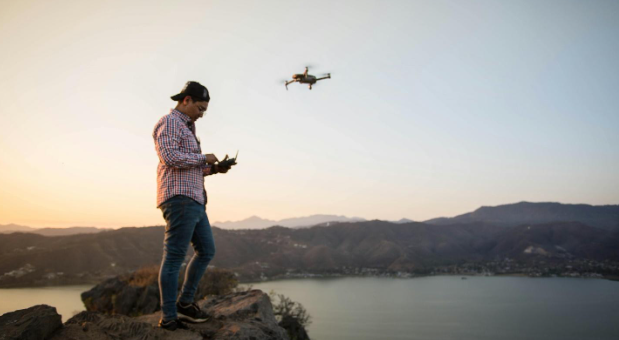
Drones have become a frequent sight nowadays. People use them for photography, courier delivery, medicine delivery, evacuation and rescue, and even self-defense.
For example, in 2024, drones were used to deliver blood samples in the UK. Naturally, all these developments got you excited, which is why you’re learning to fly a drone. After you learn how to fly these drones, you can carry out activities like drone methane detection,* for example.
*Note: Detecting methane with drones refers to using drones attached with spectrometers. These spectrometers detect the presence of methane in a given area. Methane detection is generally carried out by the oil and gas industry to detect leaks.*
Continue reading to learn how to fly drones correctly with the help of drone flying training lessons below.
What Do You Need Before Your First Flight?
Before you begin your journey, you will first need to choose a drone. Apart from that, you will also have to learn about the applicable drone regulations in your country. For example, the CAA or Civil Aviation Authority governs all aviation-related regulations in the UK.
Choosing the Right Beginner-Friendly Drone
As a beginner, it can be a confusing, if not an intimidating, task to choose your first drone. That’s why to get started, you must first consider your own needs. In other words, you first must determine whether you want to fly drones for photography, inspecting fields, and so on.
Once you’ve determined your needs, you should consider how much you can spend. That’s because the price depends on the features. You should look for drones with features like obstacle-avoiding sensors, beginner modes, and GPS.
These features will ensure that you don’t crash your drone, can fly it easily and also navigate seamlessly.
Apart from that, ensure that you choose a drone that matches your purpose as well. For example, as a plumber, you should opt for a GPR Drone. It will help you locate underground pipes and assist you with the pipe laying process.
That’s because you can avoid laying pipes in the wrong location. On the other hand, as an oil and gas industry professional, you should look for drones that can be equipped with spectrometers.
This can help you carry out drone methane detection.
After determining the features, make sure that the weight of the drones is under 250g. That’s because you have to register drones above that weight, which can be a troublesome process, as a beginner.
Checking and Understanding Local Drone Regulations
After selecting and buying your drone, you need to be well-versed in the local flight regulations. For instance, you should abide by the Drone Code of the CAA in the UK.
Some of its tenets include:
- Being responsible for your flight
- Keeping your drone in sight at all times
- Flying your drone with an observer to help you keep your drone in sight
- Not flying above 120 metres or 400 feet
- Maintaining a 50-metre gap from people
- Not flying over crowds
How Should You Prepare For Your First Flight With A Drone?
You must do the following things after you select a drone and understand flight regulations:
Pick the Right Flying Location
You should choose a spot that is in accordance with the regulations of your region. For example, when flying over natural terrain, you should not fly over 120 meters or 400 feet in height.
However, since that won’t always be possible, you should choose a wide open space. This will help you keep the drone in sight at all times during your drone flying training session and not have to navigate any obstacles. Apart from that, you should also choose a people-free zone.
That way, you won’t be violating the 50-metre restriction.
Additionally, you should avoid flying in poor wind and weather. That’s because you won’t be able to handle the drone. Apart from that, flying in bad weather conditions will mean that you won’t be able to carry out drone methane detection accurately
Understand Your Drone Controls
Once you’ve scoped out a location, you should familiarise yourself with the controls of your drone, as seen below:
| Control | Which Stick You Should Use and How | What It Means |
| Roll | Right Stick in the left or right direction | The drone moves either left or right |
| Pitch | Right Stick backward or forward | The drone either moves backward or forward |
| Yaw | Left Stick to the right or left | The drone rotates to the right or left |
| Throttle | Left Stick backwards or forwards | The drone’s height/speed decreases or increases |
Table 1: Understanding Drone Controls
Use Beginner Flight Modes
You should use modes like the GPS mode, which will stabilise the drone in the air, and the return-to-home (RTH) mode. The return-to-home mode will make the drone fly back to where it started its journey.
What Will Your First Time Flying Look Like?
Your first time flying will be quite exciting. But before you actually fly, you should carry out pre-flight checks. Take a look at that below.
| Action | [(Yes)/(No)]? |
| Is my drone ready to fly? | [(Yes)/(No)]? |
| Have I charged my batteries? | [(Yes)/(No)]? |
| Is the compass calibrated? | [(Yes)/(No)]? |
| Have I updated the firmware? | [(Yes)/(No)]? |
| Does my SD card have enough space to store images/videos? | [(Yes)/(No)]? |
| Do I have extra or backup propellers? | [(Yes)/(No)]? |
| Are the weather conditions ideal? | [(Yes)/(No)]? |
| Is the airspace I’ll be flying in clear? | [(Yes)/(No)]? |
Table 2: Pre-flight Checklist for Drones
Once you’ve carried out the pre-flight checks, it’s time to start flying.
Start With Basic Maneuvers
You should get started with the basic maneuvers first. These include:
-
Hovering in Place
To start hovering, push the left stick forward gently, and balance the roll with the right stick. You can also opt for GPS mode to make things more stable.
- Gentle Left/right Turns
You should use the right stick of the drone and turn it either right or left, slowly. This will make the drone fly either right or left. It’s also known as the ‘roll’. By learning to turn the drone, you’ll be able to carry out activities like drone methane detection accurately.
- Landing Safely
Once you’ve flown the drone around, you should ease on the left stick gradually until the drone is safely on the ground.
Don’t Fly Too Far or Too High
In accordance with the CAA regulations of the UK, or equivalent regulations of the place you’re in, maintain the height and distance.
Basically, ensure that you can see the drone at all times, and that it does not fly higher than 120 metres or 400 feet.
You should only progress to the intermediate and later advanced levels after mastering this stage of your drone flying training session.
What to Do After the Flight?
After you’ve flown the drone, you should do the following things as per this checklist below:
| Action | [(Yes)/(No)]? |
| Have I powered off the drone? | [(Yes)/(No)]? |
| Have I removed the batteries from the drone? | [(Yes)/(No)]? |
| Is the controller turned off? | [(Yes)/(No)]? |
| Has the drone suffered any damage? | [(Yes)/(No)]? |
| Can the drone’s gimbal rotate freely? | [(Yes)/(No)]? |
| Have I cleaned the drone? | [(Yes)/(No)]? |
| Are the drone sensors cleaned? | [(Yes)/(No)]? |
| Did I put the drone back safely? | [(Yes)/(No)]? |
Table 2: Post-flight Checklist for Drones
The Final Word
Flying a drone for the first time can be an incredibly exciting adventure, but only if you do it right. That’s why you should follow all the tips mentioned above to enjoy a beautiful flying experience.
Ready For Takeoff?
Get in touch with a well-known provider of drones near you to source the drones! After that, enroll in a drone pilot course to master the basics and take to the skies!
