


Introduction
Ever catch yourself wondering why investors and business analysts get so fired up about the wacc formula? If so, you’re definitely not alone! In boardrooms, finance textbooks, and valuation models around the world, WACC quietly pulls the strings behind big decisions. But despite its importance, the formula often feels like a mysterious equation only finance “wizards” understand.
Well—good news! We’re about to dismantle the intimidation factor and walk through the world of Weighted Average Cost of Capital in a way that actually makes sense. No stiff jargon. No robotic explanations. Just a friendly, easy-to-digest guide to understanding what WACC is, why it’s vital, and how the famous formula works.
Ready to jump in? Let’s roll!
What on Earth Is the WACC Formula?
To put it simply, WACC—Weighted Average Cost of Capital—is a calculation companies use to figure out how much it costs them to raise money from different sources, such as debt and equity. It’s like blending ingredients for a smoothie: each one has its own flavor (or cost), and the final taste depends on how much of each ingredient you toss in.
Here’s the classic wacc formula you’ve probably bumped into:
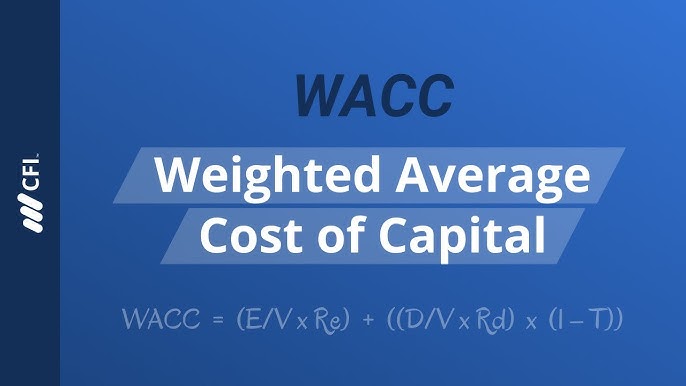
WACC = (E/V × Re) + (D/V × Rd × (1 – Tc))
Where:
-
E = Market value of equity
-
D = Market value of debt
-
V = Total value of capital (E + D)
-
Re = Cost of equity
-
Rd = Cost of debt
-
Tc = Corporate tax rate
Looks neat, right? But don’t let the symbols scare you off—the meaning behind them is surprisingly logical.
Why Does WACC Matter So Much?
It Helps Companies Make Smarter Investment Decisions
Think of WACC as the minimum return a company needs from a project to make it worth the risk. If a potential investment earns less than the WACC? Yikes—probably time to walk away.
Companies use WACC to:
-
Evaluate project feasibility
-
Determine discount rates for cash flow analysis
-
Make funding decisions
-
Assess company value
In short, WACC is like that tough friend who tells you the truth even when it stings.
It Influences Valuation and Stock Prices
Investors lean on WACC when analyzing a company’s financial health. A lower WACC? That’s usually a sign the company is less risky and cheaper to fund—music to any investor’s ears. A higher WACC? Well, that might raise a few eyebrows.
Breaking Down the WACC Formula (Without Making Your Eyes Glaze Over!)
The Equity Component (E/V × Re)
Equity financing is expensive—investors expect a solid return, after all. The cost of equity is often estimated using the CAPM model, but the important idea here is that equity comes with expectations. Higher expectations = higher cost.
Why Equity Matters
-
It’s riskier for investors (no guaranteed interest payments)
-
Investors demand compensation for that risk
-
It tends to be pricier than debt
The Debt Component (D/V × Rd × (1 – Tc))
Debt is generally cheaper than equity because lenders get paid first if things go south. Plus, interest expenses are tax-deductible—score!
Why That Tax Shield is a Big Deal
The term “(1 – Tc)” reduces the cost of debt thanks to tax savings. It’s basically like getting a discount for borrowing money. And who doesn’t love a discount?
How to Actually Use the WACC Formula in Real Life
Now that we’ve demystified the bits and pieces, let’s toss everything into a practical example. Imagine you’re evaluating whether a growing tech startup should launch a new AI-driven product.
The startup has:
-
Equity worth $10 million
-
Debt worth $5 million
-
Cost of equity at 12%
-
Cost of debt at 6%
-
Tax rate of 21%
Using the wacc formula:
-
V = 10M + 5M = 15M
-
E/V = 10/15 = 0.6667
-
D/V = 5/15 = 0.3333
-
After-tax Rd = 6% × (1 – 0.21) = 4.74%
Plugging it all in:
WACC = (0.6667 × 12%) + (0.3333 × 4.74%)WACC ≈ 9.58%
So the company needs this new product to bring in at least 9.58% in returns to be worthwhile. If expected returns are 15%? Nice! If they’re 6%? Time to rethink.
Common Mistakes People Make When Using the WACC Formula
1. Assuming WACC Stays the Same Forever
Markets change. Risk changes. Costs change. That means WACC changes too. Treating WACC as a static number can throw off valuation results—sometimes significantly.
2. Mixing Book Values With Market Values
The formula specifically uses market values, not what’s written on the accounting books. Using book values can severely distort your calculations.
3. Ignoring Changes in Capital Structure
As companies borrow more money or issue new shares, their WACC shifts. Ignoring this is like using last year’s weather report to plan a beach day.
4. Forgetting About Country or Industry Risk
A global firm shouldn’t use the same WACC for a plant in Switzerland as it does for one in Venezuela. Risk isn’t one-size-fits-all.
When Should You Not Use the WACC Formula?
Yep, it’s not perfect for every scenario.
Avoid using WACC when:
-
The company’s risk profile changes dramatically from one project to another
-
You’re valuing divisions with very different risk levels
-
The company is undergoing restructuring or bankruptcy
-
There’s extreme market volatility
In those situations, using a project-specific discount rate or adjusted WACC works better.
WACC vs. Other Financial Metrics
WACC vs. IRR (Internal Rate of Return)
IRR shows the return a project generates. WACC shows the return a project needs.
When IRR > WACC → Green light
When IRR < WACC → Hard pass
WACC vs. ROIC (Return on Invested Capital)
ROIC compares profits to total capital invested. If ROIC consistently beats WACC, the company creates value. If not… investors start sweating.
Signs Your WACC Is Probably Wrong
Here are some red flags that might tip you off:
-
Your WACC drops below the risk-free rate—um, impossible!
-
You get a number above 25% for a stable, low-risk company
-
You used last year’s data instead of current market values
-
Your equity or debt portion doesn’t add up to 100%
If any of those hit home, it’s time to double-check your inputs.
FAQs About the WACC Formula
1. What is the purpose of the WACC formula?
It helps determine the minimum return required for a company to justify an investment opportunity.
2. Can WACC be negative?
Nope. Costs of debt and equity can’t realistically be negative.
3. How often should a company update its WACC?
Ideally once a year, or whenever major changes occur—like issuing new debt or equity.
4. Why is the cost of equity usually higher than debt?
Equity investors take on more risk, so they expect higher returns.
5. Do startups use the same WACC approach?
Sort of, but their cost of equity tends to be much higher due to uncertainty.
Conclusion
The wacc formula isn’t just another finance equation to memorize—it’s a powerful tool that shapes decisions, valuations, and long-term strategies across industries. Once you understand how WACC works, you’ll start spotting its influence everywhere: in investment proposals, company valuations, and even stock market reactions.
By learning how to calculate WACC correctly and understanding when to apply it, you’ll have a deeper, more practical grasp of corporate finance. And honestly? It’s kind of empowering!
Whether you’re a student, entrepreneur, investor, or just a curious reader, mastering WACC is absolutely worth your time. After all—the smarter you are about cost of capital, the better decisions you’ll make with your own money too.
